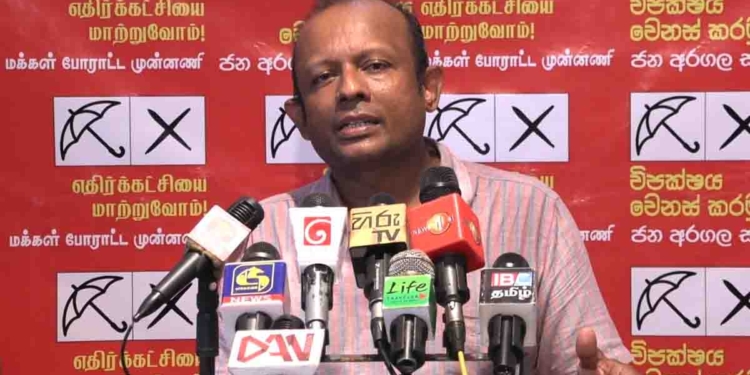
The Frontline Socialist Party held a press conference at its Nugegoda office to address the ongoing rice shortage in the market. Pubudu Jayagoda, the party’s Education Secretary, made the following remarks, highlighting critical concerns about the issue:
“As the new year begins, the challenges of the past year persist unabated, burdening the people yet again. On January 1, several newspaper headlines reported that many Sri Lankans were unable to prepare traditional milk rice for the New Year due to a lack of raw rice. Urban areas, including Colombo, faced a severe shortage of both raw and Nadu rice.
Interestingly, data from the Department of Agriculture does not indicate any practical basis for this crisis. Sri Lanka’s annual rice requirement is 2.4 million metric tons, which necessitates the production of 3.8 million metric tons of paddy. However, in 2024 alone, the country produced 4.2 million metric tons of paddy in two main harvesting seasons, with a total harvest of 4.8 million metric tons reported for 2023. This suggests that the country should have a surplus of rice.
Most of this rice, however, is controlled by large-scale mill owners. Farmers typically do not retain significant stocks of paddy. Despite this, the market is experiencing a shortage of Nadu and raw rice, even though Nadu accounted for 77% of last season’s cultivation. This raises serious concerns about market manipulation. An ‘invisible hand’ appears to be withholding rice from entering the market, and it is imperative that the government identifies who is responsible and what has happened to these stocks.
Large-scale mill owners have attributed the shortage to the use of paddy for producing beer and animal feed. Yet, following a recent discussion between the President and mill owners, the controlled price of rice was increased from Rs. 220 to Rs. 230. Subsequently, the mill owners pledged to release rice to the market. This sequence of events begs the question: if there was truly a shortage, how did rice stocks suddenly become available after the price increase? This strongly indicates that the shortage is artificially created.
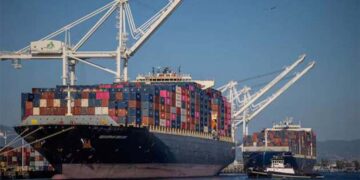
In response, the government decided to import rice, hoping that private importers would ensure fair market practices. However, even imported rice has contributed little to alleviating the shortage. Reports indicate that some importers are diverting rice stocks for producing flour and animal feed, prioritizing higher profits over public needs. Of the 79,000 metric tons of rice cleared from the port, there remains no significant improvement in market availability.
The State Miscellaneous Services Corporation, responsible for importing rice on behalf of the government, has only brought in 780 metric tons—less than 10% of the country’s daily requirement. This is a glaring inadequacy. Furthermore, questions arise about why tenders submitted by government agencies for rice imports were rejected while those from private entities were approved. This warrants an immediate investigation.
The Frontline Socialist Party calls upon the government to take decisive action to address this crisis. The need to regulate the rice market and hold large-scale mill owners and private importers accountable has never been more urgent. Failure to act will only exacerbate the suffering of ordinary Sri Lankans.”