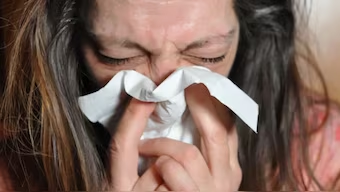
Five years after the global devastation caused by the COVID-19 pandemic, China is grappling with another major health crisis. This time, the culprit is the Human Metapneumovirus (HMPV), a mysterious respiratory virus rapidly spreading across the country, raising concerns reminiscent of the early days of the COVID-19 outbreak.
Reports suggest hospitals are overwhelmed, and crematoriums are struggling to manage the surge in cases linked to HMPV. Social media platforms are rife with videos showing overcrowded medical facilities and speculation about a new public health emergency. Adding to the strain, other illnesses, including Influenza A, Mycoplasma Pneumonia, and lingering COVID-19 cases, are reportedly circulating, further burdening China’s healthcare infrastructure.
What is HMPV?
The Human Metapneumovirus (HMPV) is an RNA virus belonging to the Pneumoviridae family. Discovered in 2001 by Dutch scientists, it has long been recognized as a global respiratory pathogen. Historical studies indicate the virus has existed for over six decades.
Symptoms and Spread: HMPV causes flu-like symptoms and is transmitted through respiratory droplets, close contact, or exposure to contaminated environments. The virus’s incubation period is three to five days, and its weak immune response makes reinfections common. While it can circulate year-round, cases peak during winter and spring.
Vulnerable Populations: Children and the elderly are most at risk, a pattern similar to COVID-19. Authorities are urging the public to adopt preventive measures like mask-wearing, hand hygiene, and avoiding crowded spaces.
Alarming Scenes Across China
Images and videos circulating on social media depict overcrowded hospitals, particularly pediatric facilities, dealing with increased cases of pneumonia and “white lung” syndrome in children. These scenes have led many to draw parallels to the initial days of the COVID-19 outbreak, sparking fear and speculation.
According to a Reuters report, China’s Disease Control Authority has implemented a new surveillance system to monitor unknown pneumonia cases, preparing for an anticipated rise in respiratory illnesses during the winter months. This initiative aims to address gaps in preparedness noted during the early stages of the COVID-19 pandemic.
Transparency Concerns
While health officials have recommended mask-wearing and frequent handwashing, questions about transparency are mounting. Critics are drawing comparisons to the initial handling of COVID-19, with accusations that the government may not be fully forthcoming about the scale of the crisis.
An account on X (formerly Twitter), identified as “SARS-CoV-2 (Covid-19),” claims that multiple viruses, including HMPV, Influenza A, and Mycoplasma Pneumonia, are concurrently spreading in China, contributing to the chaos in hospitals and crematoriums.
What Lies Ahead
As China battles the HMPV outbreak, the global community watches with bated breath, recalling the devastating ripple effects of COVID-19. While Chinese authorities work to control the virus’s spread, the effectiveness of their response remains under scrutiny.
Whether this crisis will escalate into a global health emergency or remain contained within China’s borders depends on the steps taken in the coming weeks. For now, the world is left hoping for swift and transparent action to avert another pandemic.