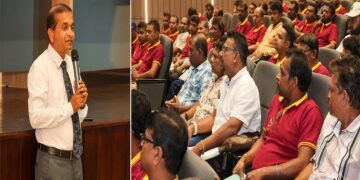
The Palm Oil Industry Association (POIA) of Sri Lanka recently held its 5th Annual General Meeting, drawing enthusiastic participation from members and well-wishers. Dr. Rohan Fernando was reelected as the President of the Association, reaffirming his leadership during a pivotal time for the industry. The event was graced by distinguished guests, including the High Commissioner of Malaysia, Badli Hisham Adam, and the Indonesian Ambassador, Dewi Gustina Tobing.
Addressing the gathering, Dr. Fernando highlighted the pressing challenges faced by the association and the measures already undertaken to address them. He also outlined the strategies planned for the coming year to mitigate these issues, reinforcing the association’s commitment to advocating for the lifting of the oil palm ban and promoting its benefits for Sri Lanka’s economy.
Oil palm has been a cornerstone of economic progress in Indonesia and Malaysia, driving poverty alleviation, foreign exchange savings, and food security. Sri Lanka, however, lags behind, constrained by an ill-advised ban on oil palm cultivation. Dr. Fernando emphasized that the ban was implemented without scientific justification, resulting in job losses, increased import costs, and missed opportunities to repurpose underperforming lands in the wet zone for productive use.
Indian Prime Minister Narendra Modi’s directive to expand oil palm cultivation across 3 million hectares is a testament to the crop’s unmatched productivity—nearly four times that of coconut oil. India, as one of the largest consumers of palm oil, aims to reduce its dependence on imports, an approach Sri Lanka could learn from to address its own edible oil demands sustainably.
Globally, palm oil meets over 40% of the world’s vegetable oil needs, yet Sri Lanka stands out as the only country to impose a ban on its cultivation. In 2014, the government approved 20,000 hectares of oil palm, which could have supplied half the nation’s edible oil demand by 2025, saving foreign exchange and easing pressure on coconut oil production.
Dr. Fernando reiterated that the POIA has consistently countered unfounded allegations against oil palm and engaged in dialogue with the government to showcase the crop’s economic benefits. The association has presented evidence on how oil palm can address rural poverty, increase stakeholder incomes, and enhance economic resilience.
The examples of Indonesia and Malaysia demonstrate the transformative potential of oil palm cultivation. Both crops—coconut and oil palm—can coexist, providing sustainable solutions to meet domestic edible oil demand and boost export opportunities. However, Sri Lanka’s current policy prioritizes coconut oil while discouraging the cultivation of oil palm, overlooking its economic advantages.
Dr. Fernando expressed optimism that the new administration, with its focus on food security, poverty alleviation, and zero hunger, will take a pragmatic view of oil palm cultivation. The association remains hopeful that the government will lift the ban and recognize oil palm as a vital agricultural crop to drive economic progress and alleviate rural poverty.
With rational policy reforms and visionary leadership, oil palm can be the catalyst for a brighter economic future for Sri Lanka, much like its transformative role in Indonesia and Malaysia. The POIA, under Dr. Fernando’s leadership, is committed to ensuring this vision becomes a reality.