

Beijing, Oct 29 (PTI) – In a significant development, Brazil has opted not to join China’s Belt and Road Initiative (BRI), making it the second BRICS nation, alongside India, to reject the large-scale infrastructure and investment project.
President Lula da Silva’s administration has decided against formally joining the BRI, instead exploring alternative routes for collaboration with Chinese investors, Celso Amorim, Brazil’s special presidential adviser for international affairs, confirmed on Monday. “We aim to elevate our relationship with China without signing an accession agreement,” Amorim told the Brazilian newspaper O Globo. He emphasized that Brazil would not be bound by a treaty, choosing not to rely on Chinese-led projects as an “insurance policy.”
Amorim elaborated that Brazil intends to use aspects of the BRI framework selectively, seeking “synergy” between Brazilian infrastructure projects and associated investment funds without a formal commitment to the initiative. As he told the South China Morning Post, China “may call it the Belt and Road, but what’s essential is prioritizing projects defined by Brazil that may or may not align with Beijing’s interests.”
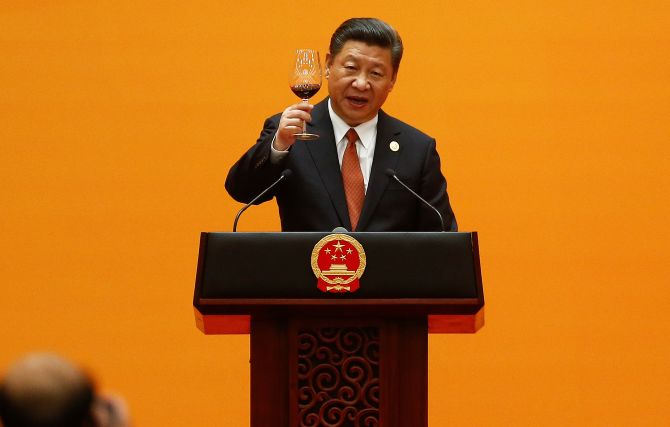
This decision undermines China’s plans to highlight Brazil’s involvement in the BRI during President Xi Jinping’s state visit to Brasilia on November 20. Brazilian officials from the economic and foreign ministries have voiced opposition, arguing that joining the BRI would not deliver short-term benefits and could complicate future relations, especially with a potential Trump administration.
Following discussions in Beijing, Amorim and Rui Costa, the Brazilian president’s chief of staff, reportedly returned “unconvinced” by China’s proposals, sources informed the Post. Lula, who was unable to attend this month’s BRICS summit in Kazan due to an injury, remains connected to the bloc through former Brazilian President Dilma Rousseff, now heading the Shanghai-based BRICS New Development Bank (NDB).
The decision mirrors India’s longstanding opposition to the BRI. India has criticized China’s flagship infrastructure program over sovereignty concerns, particularly regarding the $60 billion China-Pakistan Economic Corridor (CPEC) that runs through Pakistan-occupied Kashmir. Indian diplomats argue that BRI projects should adhere to global norms of transparency, governance, and financial sustainability, with critics highlighting “debt trap” concerns, such as the Hambantota port in Sri Lanka.
Meanwhile, U.S. Trade Representative Katherine Tai advised Brazil to consider the BRI “objectively” and manage associated risks. The Chinese embassy in Brasilia countered her comments as “irresponsible” and “disrespectful,” while China’s state-run Global Times editorialized that Tai’s remarks reflect “Monroe Doctrine” thinking.
The editorial added, “Brazil does not need others dictating its partnerships,” and characterized U.S. moves in Latin America as an effort to construct a “small yard, high fence” against China. It argued that cooperation between China and Brazil aligns with their shared interests and supports the Global South’s push for a fairer economic order—a shift that, it said, “Washington cannot prevent