Several of Sri Lanka’s former presidents remain alive, but few remain actively involved in politics. Among those who have stepped back from the political scene are Chandrika Kumaratunga and Gotabaya Rajapaksa. Although both served as executive presidents, neither currently engages in politics directly. Gotabaya Rajapaksa, the most recent of these former presidents, has distanced himself from political life, frequently leaving and returning to Sri Lanka. His withdrawal from politics is evident as he appears exhausted by the political arena. Similarly, Chandrika Kumaratunga, another former executive president, has shown no indication of re-entering the political fray, despite past moments where it seemed possible.
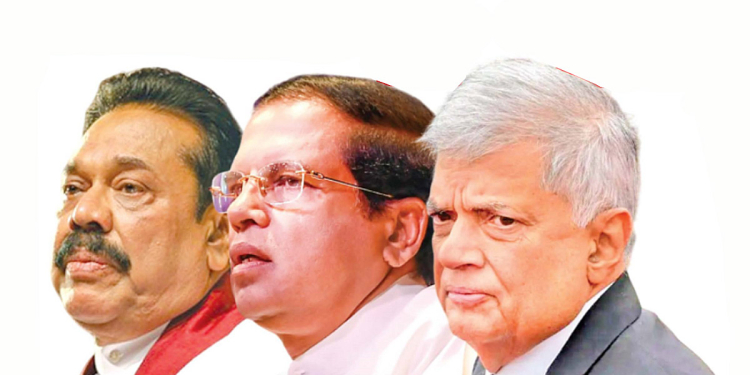
In contrast, three former presidents—Mahinda Rajapaksa, Ranil Wickremesinghe, and Maithripala Sirisena—have remained more active in politics. All three have served as members of parliament, with Wickremesinghe leaving Parliament only to assume the presidency. However, with parliamentary elections looming, speculation surrounds their potential participation in the upcoming race. Mahinda Rajapaksa, once a dominant figure in Sri Lankan politics, initially entered politics from Hambantota before switching to the Kurunegala district, where he achieved a record-breaking victory. His shift from Hambantota to Kurunegala was seen as strategic, as Kurunegala offered more votes. However, despite this past success, it now seems that Rajapaksa may have grown weary of politics, not due to age or health, but possibly because of the public’s changing perception of him and the broader Rajapaksa family.
Maithripala Sirisena, known for his unexpected rise to the presidency, is another prominent figure in Sri Lankan politics. A leader from Polonnaruwa, Sirisena’s presidency was marked by significant controversy, including the highly publicized release of a death row inmate. While Sirisena has remained politically active in recent years, he has now announced that he will not contest the upcoming general election. His decision to step back from politics suggests that even former presidents with strong political legacies are reconsidering their future roles.
Ranil Wickremesinghe, the current executive president, has similarly navigated a long and complex political career. After serving multiple terms as Prime Minister, he achieved his lifelong goal of becoming President. Wickremesinghe’s tenure has been marked by significant economic challenges, including his negotiations with the International Monetary Fund (IMF) to stabilize the country’s finances. While his administration claims notable successes, Wickremesinghe has decided not to contest the general election this time around. Previously, he contested as a representative of the United National Party, securing only one seat through the national list after a dismal electoral showing.
Overall, Sri Lankan politics appears to be in a state of flux. The traditional major parties, including the Sri Lanka Freedom Party (SLFP), the United National Party (UNP), and the Janatha Vimukthi Peramuna (JVP), are struggling to maintain relevance. These parties are now attempting to rebrand themselves through new alliances and political identities.
4o