
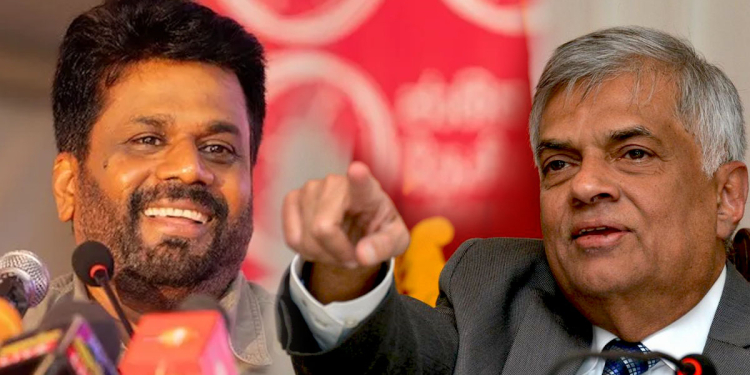
Sri Lanka Freedom Party (SLFP) General Secretary and Member of Parliament Dayasiri Jayasekara stated that former President Ranil Wickremesinghe was instrumental in Anura Kumara Dissanayake’s victory in the last presidential election. He made these remarks during a meeting held on the 17th.
Jayasekara emphasized that the local government election had initially been called years ago, subsequently postponed, and even taken to court. Although the court directed that the election be held, it is only now being re-proposed with new nominations.
“If that election had taken place back then, I truly believe the JVP would not have achieved their recent success,” Jayasekara said. “At that time, if the emotions and sentiments of the people had been allowed to surface through a democratic process, the JVP would not have secured such a significant victory in the last parliamentary election.”
He further noted that repeated requests had been made to then-President Wickremesinghe to conduct the parliamentary election earlier, which he believes would have changed the outcome.
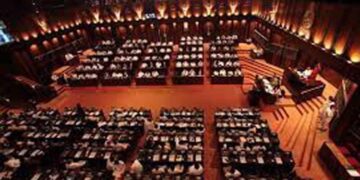
“The JVP did not have this level of parliamentary representation previously. Their numbers increased only after the presidential and subsequent parliamentary elections,” he added.
Jayasekara pointed out that a president was elected with only 42% of the vote for the first time in Sri Lanka’s history. “Even R. Premadasa, who held the record for the lowest winning percentage in 1988, received 50.02%. But this time, 68% of the electorate voted against the president.”
He criticized the decision to dissolve Parliament just three days after the presidential election, claiming it left many supporters disoriented.
“As the General Secretary of the SLFP, I coordinated with about 80 electoral organizers from each district to support Sajith Premadasa. We held large-scale meetings across the country. We believed he had a real chance at victory. But Ranil Wickremesinghe, by securing 2.2 million votes, cleared the path for Anura Dissanayake to rise. It was Ranil who defeated Sajith, not Anura. His target was Sajith Premadasa. In the process, he dismantled the UNP and sabotaged its presidential aspirations.”
Jayasekara said this paved the way for the JVP to take control. “In a way, it’s a good thing. Because otherwise, they would have never come to power without misleading the public. Now, let them govern—the people can now see what kind of governance they offer, and the financial gains they accumulate day by day.”
He then turned to a more satirical tone, referencing a recent incident: “It seems that ‘Rilav’ was caught the other day. According to our data, there are 159 Rilavs in government, 66 Dandulenas in the opposition, and one peacock—Anura Dissanayake. The peacock shows off his feathers, but his back is exposed. That’s why I wrote it. What else can be said? Just think about it—have you ever seen such absurdities?”
Jayasekara elaborated further, alleging that individuals switch political allegiances frequently and are often misrepresented in multiple records: “From one estate, a group of Rilavs jumps to the next. One estate lists them, and the next does too. If there were originally 50,000 Rilavs, the number would now appear as 200,000 due to duplicate listings. They don’t even reside in one place. According to the records, a single Dandulena appears across multiple estates. So if 50,000 Rilavs existed, the inflated count would now be closer to 300,000 or 400,000. We must let such ridiculous things unfold because that’s the nature of how this government is operating.”
Addressing the broader political climate, Jayasekara stated, “Problems are everywhere, and none are being resolved. That’s why we were defeated even though we anticipated a win. Our supporters didn’t turn up to vote during the parliamentary election. Otherwise, this district would never have been divided into a 12-to-3 ratio. The JVP secured 12 seats, while we were reduced to three. Even in our worst defeats, we always managed at least four seats.”
He concluded by calling for resilience and strategic preparation: “We must now make this upcoming election one where we reclaim our strength. We can’t keep falling indefinitely. We may have lost more than others, but there have also been times when we have won.”