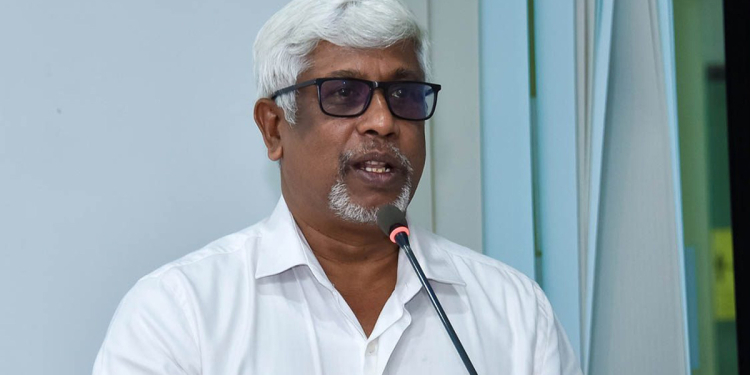
The 2024 presidential election in Sri Lanka has concluded, and a new president has been appointed. The Election Commission of Sri Lanka led the entire process, despite facing numerous challenges and criticisms. Nonetheless, the Commission’s effort to ensure a peaceful election is commendable. Following the election, the News Center YouTube channel conducted an interview with Mr. Saman Sri Ratnayake, the Commissioner General of the Election Commission, focusing on upcoming elections. Below are some highlights from the discussion.
The Oath-Taking of Parliament Members
After the president was appointed, a member of his party was also appointed to parliament but has yet to be sworn in. The question was raised: Can a parliament member take an oath outside of parliament, without doing so in front of the Speaker?
Mr. Ratnayake clarified that this is possible. Citing a precedent from when Mr. Basil Rajapaksa was the Minister of Finance, he explained that Rajapaksa had not taken his oath before the Speaker either. According to Article 6, once an oath is declared, it holds legal validity. Such practices have occurred before.
Controversy Over Vote Counting
During the presidential election, the Samagi Jana Balawegaya alleged that the second preferences were counted without proper notification. Addressing this, Mr. Ratnayake explained that election staff, political party representatives, and observers were stationed at various locations throughout the election process, including the postal voting stage. Each party’s representatives were present at the Election Commission’s main office and at vote-counting centers. The Commission provided them with the necessary permits, but their presence and movement were not the Commission’s responsibility.
Mr. Ratnayake further stated that representatives were summoned to the Chairman’s office, where vote data was displayed, demonstrating that no candidate had reached the 50% mark. Therefore, the order was given to begin counting second preferences. Party representatives were present, and if any had left during this time, the Commission could not be held accountable.
Managing Media During Elections
The interview also touched on the role of social media and mainstream media during the election’s silent period. While social media behavior was mostly positive, there were concerns about certain electronic media outlets, which use public airwaves. When asked if stricter laws were needed to regulate these outlets, Mr. Ratnayake responded that media, often referred to as the “fourth estate” in a democracy, must operate with responsibility and accountability. While restrictions should not be imposed unnecessarily, media professionals need to understand the importance of ethical reporting. When this responsibility is neglected, regulatory standards are necessary to uphold public trust.
Delay in Election Results
There were also concerns regarding the delay in announcing election results. Mr. Ratnayake explained that, in comparison to previous elections, the 2024 results were calculated relatively quickly, with the final results delivered by 4 p.m. Unlike prior elections, this was the first time preferences were counted. Additionally, with 38 candidates in the race, the vote-splitting process was more complex than usual. Typically, only two main candidates dominate, but this election saw three significant candidates, with at least eight securing over 10,000 votes. Thus, the vote distribution and counting were more time-consuming.
The interview provided insights into the Election Commission’s processes, addressing key concerns raised during and after the presidential election.